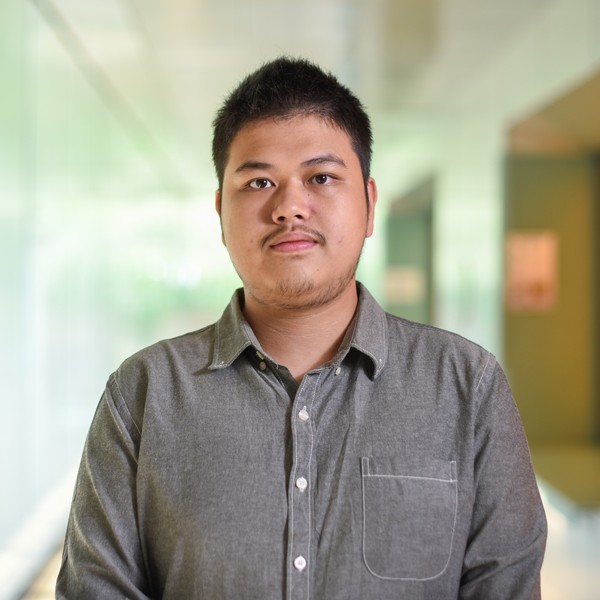
I’m Yanjin He (何彦瑾), a first-year Ph.D. student in Electrical Engineering and Computer Science at the University of Michigan, Ann Arbor, advised by Prof. Qing Qu. Before coming to Michigan, I received my bachelor’s degree from the School of Mathematical Sciences at Peking University. During my undergraduate years, I visited the University of Notre Dame in the summer of 2024 (supervised by Prof. Meng Jiang), and I visited UIUC in the summer of 2025 (supervised by Prof. Tong Zhang).
My research focuses on generative models, especially diffusion models for both vision and language. I work on the representation spaces in which generative models operate, and on better training and sampling for diffusion models. I am also interested in the theory behind generative models.
I am always happy to chat about any of these topics — feel free to reach out at yanjinhe@umich.edu.
Education
Publications
-
SWIFT: Self-guided Weak-to-strong dIFfusion models via Target extrapolation
Yanjin He, Cuifeng Shen, Wanzhou Lei, Maohua Li, Tao Lan, Kan Liu, Hanlin Tang, Qing Qu
arXiv preprint, 2026.10
[PDF] [arXiv] -
Scaling and Distilling Text Embeddings for Better Diffusibility
Zekai Zhang, Yunjie Tian, Yanjin He, Xiaoyan Zhang, Dongdi Zhao, Qing Qu, Di Fu
arXiv preprint, 2026.10
[PDF] [arXiv] [GitHub] -
Super-Resolution in the Right Latent Space: A Frozen Vision-Foundation Substrate
Wanzhou Lei, Cuifeng Shen, Yanjin He, Maohua Li, Hua Yuan, Per-Olof Persson, Tao Lan, Kan Liu, Hanlin Tang
arXiv preprint, 2026.10
[PDF] [arXiv] -
Pre-trained Models Perform the Best When Token Distributions Follow Zipf’s Law
Yanjin He, Qingkai Zeng, Meng Jiang
EMNLP 2025 (Main Conference)
[PDF] [arXiv] [GitHub]
Research Experience
🔥 News
- 2026.10: 📄 Two papers on diffusion models and one paper on diffusion language models are now available on arXiv.
- 2026.09: 🎓 Started my Ph.D. in EECS at the University of Michigan, Ann Arbor, joining the DeepThink Lab led by Prof. Qing Qu.
- 2026.06: ✈️ Started a research internship at Alibaba in Hangzhou.
- 2026.06: 🏅 Awarded Outstanding Graduate of Peking University.
- 2026.06: 🎓 Graduated from Peking University with a B.S. in Mathematics.
- 2026.03: 🎤 Gave a talk at Wuhan University.
- 2025.11: ✈️ Presented our poster at EMNLP 2025 in Suzhou.
- 2025.09: 🎉 1 Paper (as first author) accepted by EMNLP 2025 (Main Conference).
- 2025.09: 🏅 Named as Merit Student.
- 2025.09: 🏅 Awarded the Leo KoGuan Scholarship.
- 2025.06: ✈️ Going to UIUC for summer internship.
Talent Programs
- Elite Undergraduate Program in Applied Mathematics and Statistics (应用数学及统计拔尖人才计划), Peking University, 2024
- Mathematical Talent Program, Peking University, 2022
Honors and Awards
- Outstanding Graduate, Peking University, 2026
- Merit Student, Peking University, 2025
- Leo KoGuan Scholarship, Peking University, 2025
- Merit Student, Peking University, 2024
- Ding Shisun-Gui Linlin Academic Scholarship (丁石孙-桂琳琳优秀学生奖学金), Peking University, 2024
- WizardQuant Scholarship, Peking University (1 awardee in the School), 2024
- First Prize, 16th National College Student Mathematics Competition, Beijing, 2024
- Panasonic Scholarship, Peking University (5 awardees in the University), 2023
- Outstanding Study Award, Peking University, 2023
- First Prize, 15th National College Student Mathematics Competition, Beijing, 2023
Selected High School Awards
- Gold Medalist, Chinese Mathematical Olympiad (CMO Finals), 2021
- Outstanding Graduate, Affiliated High School of South China Normal University, 2021
- Top 10 School Stars, Affiliated High School of South China Normal University, 2020